

Scuba Boat Safety Procedures Explained
Table of Contents
- What to Expect Before Your Boat Dive
- The Dive Boat Safety Briefing: What Your Operator Must Cover
- Pre-Dive Equipment Checks and Buddy Procedures
- Scuba Boat Entry and Exit Procedures
- Safe Movement and Awareness Aboard the Boat
- What to Do If Separated from a Dive Boat
- Boat Diving in Rough Water: Preparation and Safety
- Monitoring Air, Depth, and Dive Time
- Frequently Asked Questions
Last Updated: October 12, 2026
What to Expect Before Your Boat Dive
Stepping onto a dive boat for the first time can feel overwhelming. Understanding scuba boat safety procedures makes the experience far safer.
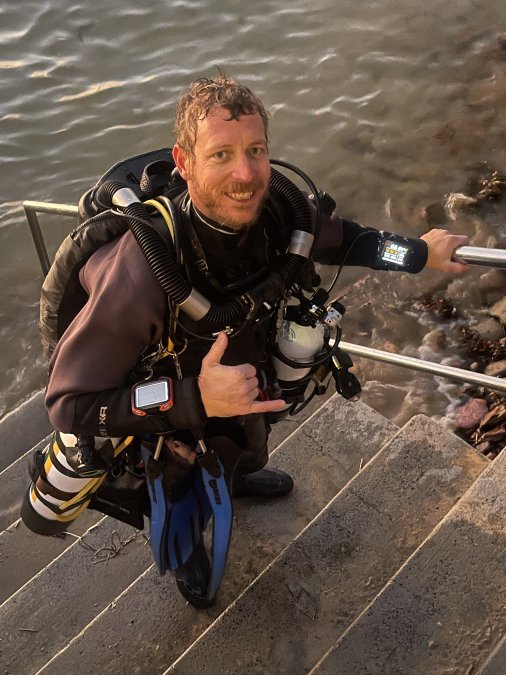
At Central Coast Divers, we've guided thousands of divers through their first boat experience.
The boat is your base of operations. Understanding the layout, where the crew stands and how to move safely on deck prevents accidents before they happen.
The Dive Boat Safety Briefing: What Your Operator Must Cover
Your dive operator must deliver a safety briefing before the boat leaves the dock, covering the plan for your dive.
Proper scuba boat safety procedures cover these core elements in the briefing:
- Boat layout and crew positions, where the crew stands, where you'll enter and exit, where emergency equipment is located
- Dive plan specifics, depth, bottom time, current direction, what you'll see, where the group will go
- Emergency procedures, what to do if separated, where to surface, how to signal for help
The briefing should take 10-15 minutes. If it's rushed or skipped, speak up. Your safety depends on clear communication before you get wet.
Securing Scuba Tanks and Equipment
Your scuba tank is your lifeline underwater, so it must be secured against shifting or falling. Most dive boats use tank bungee straps or dedicated racks, and the crew will show you how to place your tank:
- Place your tank in the designated rack or holder
- Secure it with a bungee strap across the top
- Check that it's snug and won't move
- Keep the valve facing outward so the crew can see the pressure gauge
Never leave a tank unsecured, a loose tank can injure someone or damage the boat. Let the crew check your work.
Keep your other gear in your dive bag until just before entry. Don't leave it scattered on the deck; crew and other divers need space to move.
Crew Instructions and Dive Plan Review
Your crew will give you instructions tailored to that day's conditions, covering:
- Current direction and strength, which way the water is moving, how it will affect your dive
- Descent and ascent procedures, where you'll descend, how fast, what to look for
- Group management, how the group will stay together, whether you'll follow a reef or structure
- Surface procedures, where you'll surface, how you'll signal the boat, where the ladder is
The crew will also review hand signals, which are essential because you can't talk underwater:
- OK sign, thumb and forefinger forming a circle
- Not OK, flat hand across the throat
- Up, thumb pointing upward
- Down, thumb pointing downward
Ask questions during the briefing if you don't understand a signal or procedure, because confusion underwater is dangerous.
Pre-Dive Equipment Checks and Buddy Procedures
Before you enter the water, you and your buddy must check each other's gear. This buddy check is non-negotiable, your buddy is your safety partner, and you stay together, watch each other and help each other if something goes wrong. Many divers use the acronym ABCD:
- A: Air, Check that your buddy's tank valve is open. Look at the pressure gauge. Make sure they have enough air.
- B: Buoyancy, Check that the buoyancy control device (BCD) inflates and deflates smoothly. Ensure it's not damaged.
- C: Clips and Closures, Check that all straps are fastened, all zips are closed, and nothing is loose or hanging.
- D: Depth gauge and Dive computer, Check that these devices are working and visible.
You'll also check your mask fits snugly, your regulator works, your fins are secure and your weights are fastened. This takes 2-3 minutes and is time well spent.
After the buddy check, stay with your buddy throughout the dive. Separation underwater is the primary cause of diver emergencies.
Scuba Boat Entry and Exit Procedures
Entry and exit make most new divers nervous, and they're the moments where technique matters most.
Your operator will tell you which entry method to use. The two most common are giant stride and back roll.
Entry Techniques: Giant Stride and Back Roll
Giant Stride Entry
Here's how it works:
- Stand at the platform edge with your fins on
- Hold your mask and regulator in place with one hand
- Place your other hand on your chest or BCD
- Look forward (not down)
- Take one large step forward
- Fall into the water
The key is commitment. Hesitation causes you to land awkwardly; a confident step gets you clear of the boat safely.
Back Roll Entry
Back roll is used on smaller boats or when there isn't space for a giant stride. You sit on the boat's edge facing inward.
Here's the sequence:
- Sit on the boat's edge with your fins on
- Hold your mask and regulator in place
- Tuck your chin slightly
- Tip backward smoothly
- Roll into the water
Back roll feels unnatural at first. But it's actually very safe. You can't land awkwardly because you're rolling, not stepping.
Both methods work.
Water Exit and Ladder Safety
Exiting is often harder than entering, because you're tired and your air is low. Most boats use a ladder. Here's how to use it:
- Approach the ladder slowly and calmly
- Signal the crew that you're ready to exit
- Place one hand on the ladder
- Keep your fins on until you're on the ladder
- Remove one fin at a time once you're stable on the ladder
- Pull yourself up using your arms and legs
- Step onto the boat deck
The crew will help by steadying the ladder or offering a hand. Accept the help.
Never remove your fins in the water before the ladder, they give you propulsion and control. If the ladder is crowded, wait your turn.
Some boats have exit platforms at the water level, where you can remove your fins before climbing the ladder.
Safe Movement and Awareness Aboard the Boat
The boat deck is busy, with people moving, gear everywhere and the boat rocking. One misstep can cause an injury. Move carefully:
- Hold the rail, use handholds whenever possible
- Watch your step, tanks, bags, and other gear create trip hazards
- Stay low if the boat is rough, lower centre of gravity means better balance
- Don't run, walking is safer than running on a moving platform
Don't sit in high-traffic areas, leave gear scattered across the deck or lose awareness of where other divers are. If the boat is rough, sit down, hold on and wait for conditions to improve.
Many divers experience seasickness. If this happens to you:
- Sit in the middle of the boat where movement is less pronounced
- Look at the horizon
- Stay hydrated
- Avoid looking at your phone or reading
Seasickness is unpleasant but temporary, and many divers still dive successfully after feeling queasy on the ride out.
What to Do If Separated from a Dive Boat
Separation from the boat is rare when divers follow the dive plan and stay with their buddy. But it can happen. Knowing what to do prevents panic.
If you surface and can't see the boat:
- Stay calm, panic is your biggest enemy
- Signal for help, inflate your BCD fully so you float high in the water
- Use a whistle or air horn, if you have one, use it to signal
- Stay with your buddy, do not separate further
- Inflate a surface marker buoy, if you have one, deploy it so the boat can see you
- Stay in the area, don't swim away from where you surfaced
- Keep your regulator in your mouth, breathe normally from your air supply
- Watch for the boat, it will come looking for you
Modern dive boats monitor their divers closely, and if a diver doesn't surface where expected, the crew starts searching immediately. Your role is to stay visible and calm, floating high with an inflated BCD makes you easy to spot, while thrashing or swimming away makes you harder to find.
Boat Diving in Rough Water: Preparation and Safety
Rough water changes everything about boat diving. The boat rocks. Entry and exit become harder. Current increases.
Before diving in rough water, ensure you're ready:
- Check the forecast, understand wind speed, wave height, and current
- Discuss conditions with your operator, they know local waters and can advise on safety
- Wear a life jacket, some operators require them in rough conditions
- Take anti-nausea medication if needed, consult your doctor first
On the boat in rough water:
- Sit low and hold on
- Don't stand unless necessary
- Secure all gear so it doesn't slide around
- Move slowly and deliberately
Entry requires extra care because the boat and water are both moving.
Current is often stronger in rough water and can push you away from the boat or pull you deeper.
Exiting also requires patience. The ladder moves with the boat, so wait for the right moment, grab it firmly and pull yourself up decisively.
Monitoring Air, Depth, and Dive Time
Underwater, you're responsible for monitoring three things: how much air you have, how deep you are and how long you've been down.
Air Supply
Check your air pressure gauge every few minutes.
Depth
Your depth gauge tells you how deep you are.
Dive Time
Your dive computer tracks how long you've been underwater and calculates your no-decompression limit.
Never hold your breath underwater. Always breathe steadily and continuously from your regulator.
Scuba boat diving is straightforward when you understand the procedures and follow them consistently. Whether you're diving for the first time or returning after years away, our team can help you refresh your knowledge and build the confidence you need for a great dive experience.
Frequently Asked Questions
What should a scuba boat dive briefing include?
A thorough dive boat safety briefing covers the dive plan, entry and exit procedures, emergency signals, current direction, maximum depth, buddy system expectations, and crew instructions. Your operator should explain how to secure your scuba tanks, where the ladder is located, how to signal for help, and what to do if you become separated from the group. Ask questions if anything is unclear, your safety depends on understanding these procedures before you enter the water.
How do you safely enter the water from a dive boat?
The two most common scuba boat entry techniques are the giant stride and the back roll. For a giant stride, step off the platform with one leg extended forward and one back, landing feet-first in the water. For a back roll, sit on the platform edge facing the boat, hold your mask and regulator, and roll backwards into the water. Your dive operator will specify which entry method to use based on boat type and sea conditions. Always wait for crew clearance before entering.
What should you do if you become separated from a dive boat?
If separated from the dive boat, stay calm and signal for help by raising one arm and inflating your buoyancy control device to remain at the surface. Stay with your buddy and monitor your air supply. Most dive boats conduct regular headcounts and will notice you are missing quickly. Remain visible and alert. Your operator should brief you on the boat's search procedures and communication methods before the dive begins. Never attempt to swim back to shore, stay at the surface and wait for rescue.
How should divers prepare for boat diving in rough water?
Before boat diving in rough water, ensure you are well-rested and have eaten a light meal. Wear extra thermal protection to maintain body heat and reduce fatigue. Secure all loose equipment to the boat or your body to prevent loss. Brief yourself on entry and exit procedures, rough conditions may require different techniques. Stay hydrated and monitor your physical condition throughout the dive. If you feel unwell or anxious, inform the crew immediately. Your dive operator may adjust the dive plan or cancel if conditions are unsafe.