
Local Scuba Diving Boat Trips: What to Expect
Table of Contents
- Local Scuba Diving Boat Trips: What a Day Actually Looks Like
- Boat Dive Sites Within a Short Ride of Shore
- How Long Is a Scuba Diving Trip Duration?
- Boat Diving vs Shore Diving: Which Suits You?
- What to Bring on a Boat Dive
- Choosing a Local Trip: Certification, Conditions and Costs
- Conclusion: Booking Your First Local Boat Dive
- Frequently Asked Questions
Last Updated: October 6, 2026
Local Scuba Diving Boat Trips: What a Day Actually Looks Like
Local scuba diving boat trips with Central Coast Divers are half-day or full-day charters that take certified divers and beginners from a marina or harbour to nearby reef, island and wreck sites, usually within a short boat ride of shore.
The best local trips share three traits: short travel time, two distinct sites, and a crew that briefs properly before anyone gets wet.
Below, we break down what a day involves, from the ride out to the gear you should pack, plus how to compare trips on what matters rather than the brochure photos.
Boat Dive Sites Within a Short Ride of Shore
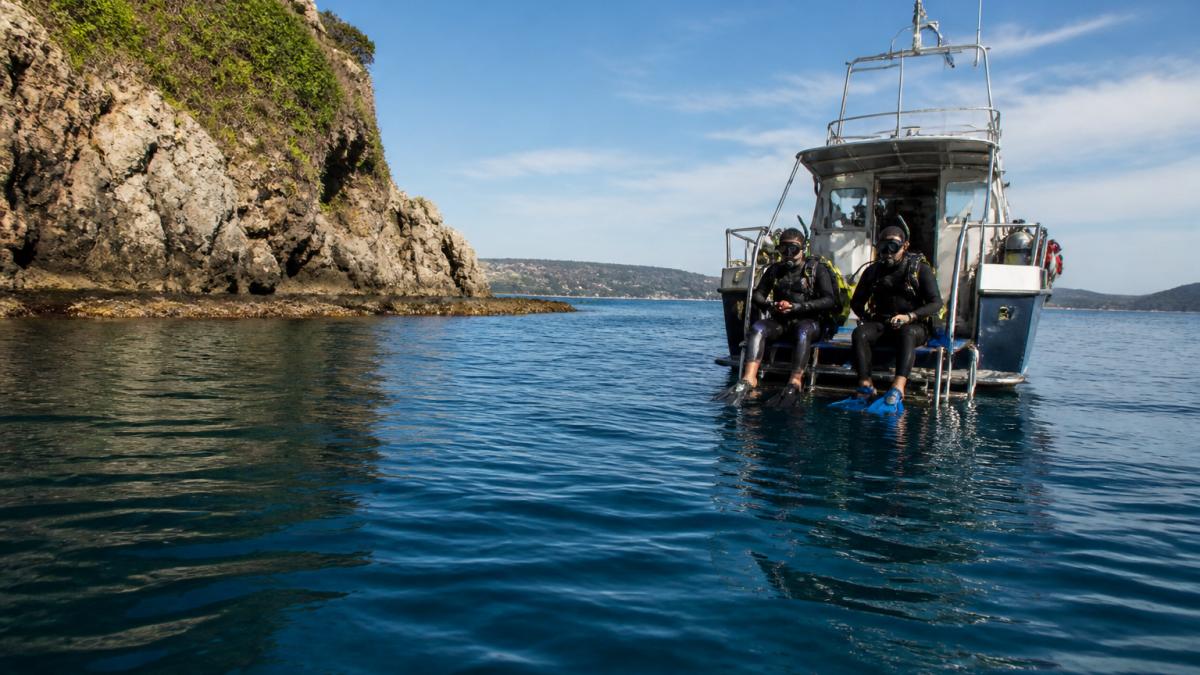
Most dive sites sit within a short boat ride of shore, which is why local boat dives suit divers who want variety without a full day at sea.
Reef and Island Sites
Reef and island sites are the bread and butter of local boat dive sites: coral gardens, rocky ledges and bommies in shallower water, often with sea turtles and bull rays working the sand patches between structures.
Ask any operator what depth range their shallow sites actually sit in. Most inshore reef and island dives run in the 5 to 18 metre band, keeping you inside no-decompression limits on a single tank.
Wreck and Deeper Sites
Wreck diving and deeper reef sites reward certified divers with more experience. Grey nurse shark aggregation sites draw divers who want a shark encounter without travelling far.
Deeper local sites typically sit in the 18 to 30 metre range, where bottom time shortens quickly, so the briefing matters more than the site itself: know your maximum depth, turn pressure and current direction before you leave the surface.
Matching the Site to the Diver
Before booking, tell the operator your certification level, logged dive count and when you last dived. A crew that knows this can steer you to the right site rather than putting a diver who has not been wet in two years on a current-swept deep wreck.
Experienced local operators like Central Coast Divers often run a shallow reef site first and a deeper or wreck site second, so the group warms up on the easier dive.
Seasonal Site Selection
Which sites are divable shifts through the year. Warmer months bring calmer seas and clearer water on the inshore reefs, suiting newer divers and photographers. Cooler months bring stronger swell and current on exposed sites, pushing operators toward sheltered island and bay sites.
Water temperature changes your gear, not just your comfort. Ask what wetsuit thickness the operator recommends for your dates, and whether they run hoods and gloves on deeper sites.
How Long Is a Scuba Diving Trip Duration?
A typical local scuba diving trip duration is four to six hours door to door, covering a double dive at two sites, including 20 to 40 minutes of travel each way, a briefing before each entry, and a surface interval between dives.
Here is how a standard double dive day breaks down:
Stage |
Typical Time |
What Happens |
|---|---|---|
Meet at Boat Ramp |
30-45 min |
Gear check, weights, tank allocation |
Boat ride out |
10-30 min |
Site briefing, equipment setup |
First dive |
40-50 min |
Guided dive at site one |
Surface interval |
60 min |
Snacks, water, rest |
Second dive |
40-50 min |
Dive at site two |
Return trip |
20-40 min |
Log dives, debrief |
Half-day trips compress this into a single dive, which suits beginners or anyone short on time. Weekend trips sometimes add a third dive.
Boat Diving vs Shore Diving: Which Suits You?
Boat diving wins on access and variety; shore diving wins on cost and flexibility.
Boat dives reach sites you cannot walk into: offshore reefs, island spots and wrecks too far out or too deep for a shore entry.
Shore diving suits divers who want to practise skills cheaply, dive on their own schedule, or build confidence before a boat trip.
For divers new to the area, a guided boat dive is the faster way to see what local waters hold and gain greater diving experiences.
What to Bring on a Boat Dive
What to bring on a boat dive comes down to three categories: certification and logbook, personal gear, and the small items people forget. Your certification card and logbook come first, crews must verify you are certified before you board.
Pack these:
- Certification card and logbook
- Mask, snorkel and fins that fit you
- Wetsuit appropriate to water temperature
- Sun protection: hat, sunscreen, rash vest
- Reusable water bottle and snacks
- Seasickness tablets taken before departure
- Towel and a dry change of clothes
- Cash or card for reef fees, if applicable
If you are hiring equipment, confirm what is included when you book. Most operators supply tank, weights, regulator and BCD, but mask and fins are usually personal items.
Choosing a Local Trip: Certification, Conditions and Costs
Certification level decides which trips you can join, and conditions decide whether the trip runs at all. Introductory dives exist for uncertified beginners, open water graduates can join guided dives at most local sites, and experienced divers can access deeper wreck and technical trips. Beyond that, operators differ on logistics, inclusions and how they handle problems.
Certification and Suitability
Match the trip to the diver, not the other way around:
- Introductory or discover scuba: no certification required, supervised by an instructor, shallow site, usually one dive.
- Open Water: the standard entry ticket for guided boat dives at most inshore sites.
- Advanced Open Water: opens up deeper sites, some wrecks, and drift dives where current is part of the plan.
- Specialty or technical: required for penetration, deep, or mixed-gas diving.
Age and medical requirements are set by the training agency and operator, not the boat. Most agencies require a medical declaration before any in-water activity, plus a doctor's clearance if you answer yes to any listed condition. Asthma, epilepsy, heart conditions, recent surgery and some medications all trigger the need for clearance. Do this before you book, a crew cannot clear you at the dock.
Accessibility and Family Suitability
Not every boat suits every diver. If you have mobility needs, ask about boarding method (ladder, platform or stern ramp), deck space, and whether crew can assist with gear. Smaller boats are often harder to board than larger catamarans, even though they reach sites faster.
For families, the usual split is certified adults and older teenagers diving while younger children and non-divers snorkel from the same boat. Confirm snorkelling is actually offered on your date, and check the minimum age for any introductory dive.
What the Trip Actually Includes
Check the list of inclusions before you pay. The items that vary most between operators are:
- Tanks and weights (not always included)
- Regulator, BCD and wetsuit hire (sometimes included, mostly an extra)
- Mask, snorkel and fins (usually personal items)
- Marine park or site access fees
- Food, water and hot drinks
- Guide ratio and whether a guide is mandatory
Pricing depends on trip length, number of dives, whether hire gear is included, and whether park fees are bundled. Ask the operator for a full breakdown in writing and compare it against another operator's.
Weather, Cancellations and Seasickness
Weather is the one variable no operator controls. Ask two questions when you book: what is your cancellation policy if the operator calls the trip off, and what happens if you cancel. Those are different policies and not always symmetrical.
If you are prone to seasickness, prepare before you board.
Confirm the trip is running the day before departure, and again on the morning. Inshore conditions can change quickly, and a good operator will call a trip rather than run it in marginal conditions.
Environmental Responsibility
Local dive sites are shared and finite. A few habits protect them and mark you as a diver crews want back on board:
- Never touch coral, and keep fins, gauges and cameras off the reef.
- Maintain neutral buoyancy so you are not dragging across structures.
- Do not chase, feed or handle marine life, including turtles and rays.
- Take nothing from a wreck or reef, including shells and artefacts.
- Follow the operator's wildlife interaction rules, which exist because local sites are regulated.
Ask an operator what they do to protect the sites they dive. Crews that brief on reef-safe behaviour, limit group sizes and use moorings rather than anchors usually know their sites best.
Conditions by Season
Conditions shift through the year, and the best season depends on what you want to see. Warmer months bring calmer seas and better visibility, suiting beginners and photographers. Cooler months bring stronger currents and swell, but also different marine life and fewer divers on site.
Water temperature swings enough to change your wetsuit choice, so ask the operator what thickness they recommend for your dates. If you are prone to seasickness, pick a calmer forecast day and take medication early.
Conclusion: Booking Your First Local Boat Dive
The gap between a good boat dive and a forgettable one comes down to preparation and the crew you dive with. Get your certification level right, pack for the conditions, and choose a trip with small groups and clear briefings.
Central Coast Divers is a family-run dive centre that has been teaching and guiding local divers since 1987. We offer professional scuba training, guided local boat dives, equipment sales and expert servicing, all from a team with decades of experience and a father-and-son instructional pair at the helm.
Frequently Asked Questions
Do I need to be certified to go on a local scuba diving boat trip?
For most local scuba diving boat trips, yes. A certified diver with an open water course or higher can join a guided boat dive, and operators will usually ask to see your certification card. If you are not certified, many dive centres run introductory dives under direct instructor supervision, which count toward nothing but give you a taste of the water. If you want to keep diving, the open water course is the standard starting point, and some operators includes boat dives as part of the training.
How long are scuba diving boat trips?
A typical local boat trip runs three to four hours from departure to return, including travel time, a dive briefing, and one or two dives. A double dive with two dive sites usually takes longer, often most of a morning or afternoon. Shorter introductory trips can be done in around two hours. Ask the operator for the total door-to-door time rather than just the in-water time, since boat ride length and surface intervals vary with the site.
What should I bring on a boat dive?
Bring your certification card, a towel, sun protection, water, and a light snack. Wear a swimsuit under your clothes so you can gear up quickly. If you own your mask, fins, or dive computer, bring them; otherwise hire equipment through the operator. Seasickness tablets are worth taking before departure if you are prone to it. Leave valuables at home, and pack a dry bag for phone and keys. Check with the operator about tank, weights, and equipment hire before you arrive.
Is boat diving harder than shore diving for beginners?
Boat diving adds a few steps: getting on and off the boat, listening to a dive briefing, and staying with your dive guide. The diving itself is often easier because you avoid long surface swims and shore entries. For beginners, a guided boat dive with a small group is a good way to build confidence. Shore diving suits people who want flexibility and lower cost, while boat diving opens up deeper reef, island, and wreck sites that are not reachable from the beach.